
Converting Pain into Wisdom and Strength
All of us know that life is a mix of pleasure and pain. Unfortunately, there are more varieties of pain than pleasure. There’s pain in letting go of something, and there’s a bigger pain when our major plans fail. There’s the sharp pain when we commit errors and the pain of success that doesn’t result in the expected happiness.
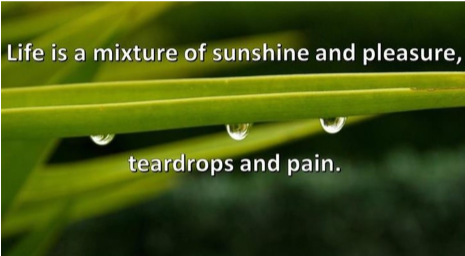
Sometimes we do experience joy and laughter when we achieve something we cherished for long. We know such moments won’t last, but their memories will remain. We all experience pain intermittently. Only the dead have no pain. We need to learn to handle pain and use it as a source of strength and wisdom.
1) You’re not alone going through pain.
A restless night after losing a loved one, difficulty returning to routine after a severe disappointment, someone’s words hurt you, fear of failure… None of these mean you’re losing your mind or not functioning — they just mean you’re human and need a little time with yourself. You are not alone. No matter how miserable you feel, remember there are others around the world experiencing similar things or even worse. For everyone, one’s own sorrow or pain appears greater than anyone else’.
The soul that is without suffering does not feel the need to know the ultimate cause of the universe and realise one’s own essential Self, nor will the question ” who am I ” ever arise in such a one. Sickness, grief, hardships… are all indispensable elements in the spiritual ascent.
2) Ask yourself more positive questions.
If we ask ourselves negative questions, we’ll get negative answers. There is no positive answer to “Why is this happening to me?”, “Why didn’t I do it differently?”, or “What if I had done it differently?” We should not ask ourselves such discouraging questions. We should replace them with positive questions that propel us forward, such as “What can I do now to fix the situation?” or “What can I do to improve?”
3) Accept your emotional pain so that you can overcome it and move on
Emotional pain is harder to deal with than physical pain. The burden of emotional pain increases when we try to hide it. Avoid it. It’s easier to say, “I have a toothache” than “I am emotionally hurt.” We should treat emotional pain also at the same level.
4) Let go of what was and is no more.
To feel free, we should realise that nothing in this world exclusively “belongs” to us, and we should let go of things we once considered “ours”. One of the hardest things in life is learning to let go — whether it’s attachment, obsession, possessiveness, hatred, or loss. Change is not easy — we fight to hold onto what’s “ours” and wrestle with ourselves to let go. Letting go is needed for our journey forward. It clears our minds of the past we’ve been clinging to. We need to emotionally release things that once were important so we can move on through the change and the pain it brings with it.
5) Separate your emotions from the problem.
We are human beings made up of many things, not just our problems. It means we are stronger than our problems and can overcome them. Keeping our personal emotions apart, we need to look at our lives objectively and analyse our problems. Once we understand its real nature, we’ll realise that it is much simpler than what we thought. This understanding will cause us much less pain.
6) Treat every challenge as a learning task for life.
Every situation in life is a lesson for us to learn from. These lessons strengthen and toughen us. They help us communicate more clearly and teach us to trust our instincts. They show us when to forgive and when to let go.
7) Make changes based on what works and what doesn’t
A large part of our life, whether good or bad, is the result of the choices we’ve made. If we don’t like a part of our life, it’s probably time to change how we make decisions. This change might not be easy, but it’s possible. We create habits that impede our lives on a daily basis. We need to get rid of them and bring positive changes that will propel our life forward. Focus should be on the small things we can change, not on the big things hard to change. These daily changes will eventually add up and turn into a big result.
8) Never stop moving forward.
Winston Churchill once said, “If you’re going through hell, keep going.” In other words, never give up. The walls we meet in life are there for a reason. They’re not there for us to stop and suffer the pain; they’re there to offer an opportunity to see and show how badly we want our goal. These walls are not there for you; their purpose is to filter out everyone who doesn’t genuinely want that goal and isn’t as strong as you.
9) Stay calm and focus on the positive aspect.
A realist sees reality as concrete, while an optimist sees reality as clay. Be optimistic and mould the “clay” your way. Take what you’ve learned from life and build something new for yourself. In other words, don’t look for difficulties in opportunities that come your way; instead, try to find opportunities in difficulties.
10) Consciously nurture your inner hope
There’s a Tibetan saying: “You must use tragedy as a source of strength.” No matter what hardship you face or how painful the experience is, once you lose hope, you have put yourself in real tragedy. Whether it’s a loss, worry, illness, or a shattered dream — no matter how deep the pain or how high your aspirations — do yourself a favor and at least once a day, place your hand on your heart and say out loud, “I still have hope!”
11) Embrace a stronger, upgraded version of yourself.
With time everyone and everything changes. We’ve been hurt, endured pain, and gone through countless difficulties that have shaped us into who we are today. Over the years, many things have happened — things that changed how we view life, things that taught us important life lessons, and things that forced us to
evolve. That’s the essence of life. We’re still the same individuals, just more experienced because of everything we’ve been through.
Conclusion:
Strength never comes from comfort, but from stepping out of our comfort zone and overcoming the challenges we never thought we’d face. When we find ourselves in the most painful moments of our life, we are open to the most significant and positive changes we can make. In the end, strong people are those who feel the pain, accept it, learn from it, and fight through it. They turn pain into wisdom and strength.